Top 10 Ways to Remove Water Stains from a Wooden Bar Table

Time:2026-10-09 Author:Liam
0%

Water stains can make a wooden bar table look neglected within minutes. A cold glass leaves a pale ring, while spilled water may create a darker, swollen patch. Learning how to remove water stains from a wooden bar table requires more than rubbing harder. The wrong cleaner can strip the finish, spread the mark, or expose unfinished wood.

Wood reacts to moisture because it is hygroscopic. The USDA Forest Products Laboratory explains that wood gains and loses moisture as surrounding humidity changes. This movement can cause swelling, shrinking, and finish failure. The National Wood Flooring Association recommends maintaining indoor relative humidity between 30% and 50%. That guidance also helps protect wooden furniture in heated or air-conditioned rooms.

This guide presents ten practical methods, from gentle drying and mild soap to controlled heat and finish repair. Each method considers the stain’s color, depth, and surface finish. White rings often sit within the finish, while dark marks may indicate deeper moisture penetration. That difference matters.

Do not expect one solution to work every time. I have seen a seemingly simple ring worsen after aggressive sanding. A soft cotton cloth, a hair dryer on low heat, and patience are safer starting points. Test every method on a hidden area first. Older tables may have fragile wax, shellac, or lacquer coatings. Some marks will need professional refinishing, not another household experiment.
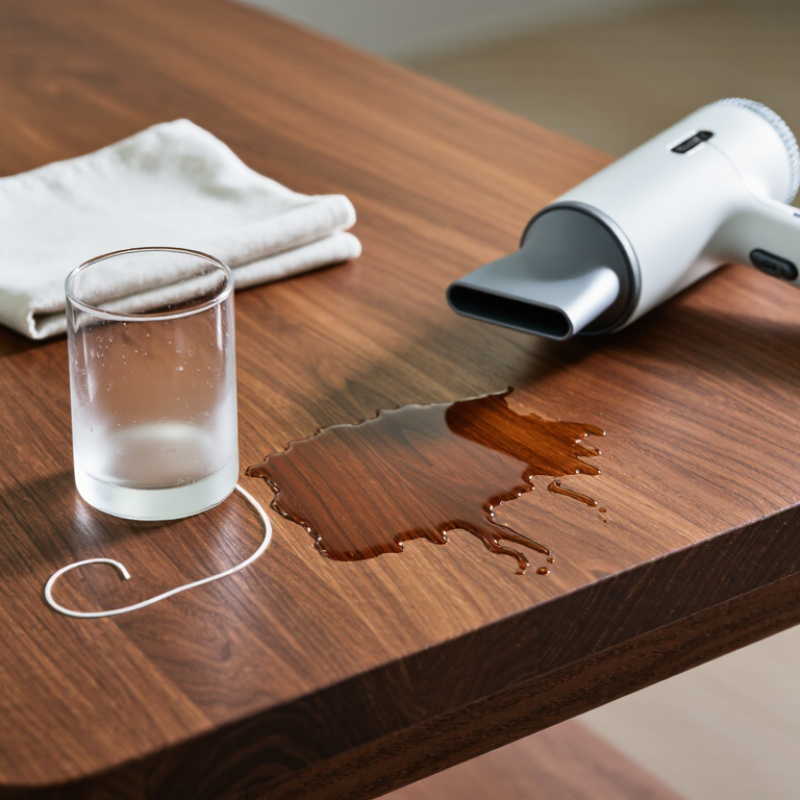
Top 10 Ways to Remove Water Stains from a Wooden Bar Table

Identify the Type and Severity of the Water Stain

Before choosing a cleaning method, identify what the mark is showing. A white, cloudy ring usually sits in the finish, where trapped moisture has disturbed the clear coating. A gray or black mark may indicate water has reached the wood fibers. Look closely. Raised grain, soft edges, swelling, or a musty smell suggest deeper penetration.

Moisture readings can add useful evidence. The USDA Forest Products Laboratory’s Wood Handbook, FPL-GTR-282 (2021), explains that indoor wood commonly equilibrates near 6–8% moisture content under typical controlled conditions. A much higher reading near the stain suggests active moisture, not merely an old surface blemish. Test several locations, including an unaffected area, because meters can misread finishes, hardware, and uneven grain. I have found color alone misleading.

Severity also depends on timing and water source. The U.S. Environmental Protection Agency’s Mold Remediation guidance recommends drying damp materials within 24–48 hours to limit microbial growth. That window matters, even for a small bar table. Clean water from a glass may leave a shallow ring; contaminated water demands greater caution and professional handling. The IICRC S500 standard classifies water damage by source and contamination level, reminding restorers that appearance is not the whole risk. Do not sand yet. If the finish is blistered, veneer is lifting, joints are separating, or the wood remains damp, document the damage first. A small test in an unseen area may prevent a larger repair mistake.

Prepare the Wooden Bar Table for Safe Cleaning

Before removing water stains, prepare the wooden bar table for controlled, gentle cleaning. Clear every glass, coaster, and decoration from the surface. Move nearby chairs away. Dust can scratch the finish when moisture is added, so wipe the table with a soft, dry cloth.

Inspect the stain under bright, indirect light. A pale, cloudy mark often sits within the finish, while a dark mark may have reached the wood. Do not assume every stain needs the same treatment. Check for peeling varnish, loose veneer, cracks, or raised grain. These areas need extra care. I once rushed this inspection and spread moisture across a weak finish.

Protect the floor with a towel or plastic sheet. Keep the table level, and place clean cotton cloths nearby. Use clean, dry hands or wear thin household gloves. Open a window if the cleaning solution has noticeable fumes. Test any mild cleaner on a hidden underside or back edge. Wait several minutes and check for dullness, color change, or stickiness.

Less moisture is safer.

Never pour liquid directly onto the tabletop. Apply a small amount to a cloth instead. Wring it until barely damp. Work with the wood grain, using light pressure and short passes. Stop if the finish becomes cloudy, tacky, or darker. Let the surface dry fully before trying another method, even if the stain looks stubborn.

Top 10 Ways to Remove Water Stains from a Wooden Bar Table - Prepare the Wooden Bar Table for Safe Cleaning

No. Cleaning Method Materials Needed Safe Preparation and Steps Best For Typical Time Safety Level
1 Immediate Drying Soft microfiber cloth; clean, dry towel Blot fresh moisture without rubbing. Wipe with the wood grain and allow the surface to air-dry completely. Fresh water rings and spills 2–5 minutes Very low risk
2 Low-Heat Hair Dryer Hair dryer; microfiber cloth Set the dryer to low heat and keep it moving at least 15 cm from the mark. Work in short intervals and stop if the finish feels warm. White moisture marks under a finish 5–10 minutes Low risk
3 Iron Over a Cloth Dry cotton cloth; household iron with steam turned off Place the cloth over the stain. Use the lowest heat setting for 5–10 seconds, then check. Never place the iron directly on the wood. Persistent white rings on sealed wood 5–15 minutes Moderate risk
4 Petroleum Jelly Treatment Petroleum jelly; soft cloth; mild dish soap Apply a thin layer to the mark and leave it overnight. Wipe away gently the next day, then remove residue with a barely damp cloth. Light, cloudy water stains 8–12 hours Low risk
5 Mineral Oil and Fine Salt Food-grade mineral oil; small amount of fine salt; soft cloth Mix a small amount of salt with oil, rub very lightly with the grain for less than one minute, and wipe clean. Test first because salt can scratch delicate finishes. Small, shallow rings on durable finishes 10–15 minutes Moderate risk
6 Baking Soda Paste Baking soda; water; soft cloth Make a thin paste, test it in a hidden area, and gently wipe the stain in the direction of the grain. Remove all residue and dry immediately. Stubborn marks on robust, sealed wood 5–10 minutes Moderate risk
7 Vinegar-Diluted Wipe White vinegar; water; spray bottle; microfiber cloth Mix equal parts vinegar and water, apply to the cloth rather than the table, and wipe briefly. Dry immediately. Avoid unfinished, waxed, or damaged surfaces. Surface residue around a water mark 5 minutes Moderate risk
8 Oil-Based Wood Cleaner Wood cleaner suitable for the existing finish; microfiber cloth Read the care instructions, test in an inconspicuous area, apply sparingly, and buff with a clean cloth. Do not saturate joints or edges. Finished tables with dull or dry-looking areas 10–20 minutes Low risk when compatible
9 Light Abrasive Refinishing Fine 320–400 grit sandpaper; tack cloth; matching finish Use only after gentler methods fail. Sand lightly with the grain, remove dust, and apply a compatible finish to the affected area. Dark stains that have penetrated the finish 30–90 minutes Higher risk
10 Professional Assessment Photos of the table; finish details; repair consultation Use this option for antique, valuable, veneer, cracked, bleached, or deeply discolored tables. Avoid further moisture, heat, or abrasive treatment. Deep black stains or delicate wood surfaces 1–7 days Safest option
Preparation Checklist: Remove all items from the table, identify whether the surface is sealed, waxed, painted, veneered, or unfinished, dust the area, test every method in a hidden spot, use minimal moisture, and dry the wood immediately after cleaning.

Try Gentle Methods for Fresh or Light Marks

Top 10 Ways to Remove Water Stains from a Wooden Bar Table

Fresh or light water marks usually need patience, not force. I once rubbed a pale ring too hard, and the spot became shinier than the surrounding finish. That mistake taught me to test gentle methods first. Wipe the surface with a dry microfiber cloth. If the mark remains, use a barely damp cloth with one drop of mild dish soap. Dry the area immediately. You can also try a hair dryer on its lowest, coolest setting. Keep it moving, and hold it at least 15 centimeters away. For a light white ring, place a clean cotton cloth over it. Warm the cloth briefly with a low-temperature iron. Check every few seconds. Never leave heat in one place.

Tips: Try these ten gentle options in order: dry buffing, mild soapy water, cool air, cotton-cloth warming, petroleum-free furniture wax, a soft baking-soda paste, diluted cleaning solution, a dry towel press, finish conditioner, or professional refinishing. Use only one method at a time. Test underneath the table first. Baking soda can dull some finishes. Skip it if the surface feels delicate.

The USDA Forest Products Laboratory’s Wood Handbook explains that wood exchanges moisture with surrounding air. Excess moisture can therefore deepen stains or cause swelling. The EPA’s Moisture Control Guidance recommends indoor humidity near 30–50 percent. Keep drinks on coasters, wipe spills within minutes, and avoid soaking the grain. The finish may hide damage temporarily, but aggressive polishing can create a larger, uneven patch.

Use Stronger Treatments for Persistent White Rings

White rings usually mean moisture has entered the table’s finish, not the wood itself. Start with a dry, soft cloth and inspect the surface under bright light. If the ring feels smooth, place a clean cotton cloth over it and warm the area with a hair dryer on its lowest setting. Keep it moving. Ten-second passes are safer than concentrated heat, which can soften or blister the finish.

For a stubborn mark, use a tiny amount of non-gel toothpaste mixed with a few drops of water. Rub gently with the grain for less than one minute, then remove the residue and apply a small amount of furniture wax. This mild abrasive can reduce the cloudy film, but it may also dull a fragile coating. Test beneath the table first. I have seen people scrub harder when results appear slowly; that usually creates a larger problem.

Persistent white rings may need a stronger professional treatment. A furniture restorer can identify whether the table has lacquer, varnish, oil, or wax before choosing a solvent or refinishing method. Do not pour harsh cleaner directly onto the surface. It can strip color, expose raw wood, or leave uneven patches. If the ring turns dark brown or black, moisture may have reached the wood, and surface polishing will not solve it. Some marks remain faint after careful work, which is frustrating but preferable to damaging the entire tabletop.

Restore, Protect, and Prevent Future Water Damage

Top 10 Ways to Remove Water Stains from a Wooden Bar Table

Restore, Protect, and Prevent Future Water Damage

Water stains often look worse than they are. Start by wiping the table dry with a soft cotton cloth. Test every method beneath the table first. For white rings, gently warm the area with a hair dryer on low heat. Keep it moving. You can also place a dry towel over the mark and press briefly with a warm iron. Never use high heat. It may soften the finish. Mild dish soap, diluted vinegar, baking soda paste, furniture polish, or fine steel wool may help, depending on the coating. Sanding should be the final repair, not the first reaction.

Dark stains require more care. They may indicate moisture penetration, not a surface mark. Light sanding, followed by suitable wood brightener, can reduce discoloration. Refinishing may be necessary. I have learned that aggressive scrubbing can create a larger dull patch. That mistake is easy to make. The U.S. Department of Agriculture’s Forest Products Laboratory explains that wood changes dimensions as its moisture content changes. Let the table dry gradually before repairing it.

Prevention protects the finish longer. Use coasters, wipe spills immediately, and keep plants on waterproof trays. The U.S. Environmental Protection Agency recommends indoor relative humidity between 30% and 50%. A small hygrometer can monitor this range. Keep the table away from radiators and damp walls. Reapply a compatible protective finish when the surface feels dry or looks uneven. Inspect the underside monthly. Small leaks often appear there first.

FAQS

What does a white, cloudy ring usually mean?

It often means moisture is trapped inside the table’s clear finish. The wood may remain undamaged. Look closely.

What do gray, brown, or black stains suggest?

Dark marks may show that water reached the wood fibers. Surface polishing may not remove them. Deeper repair could be needed.

Which details indicate deeper water penetration?

Raised grain, swelling, soft edges, lifting veneer, separating joints, or a musty smell are warning signs. Do not sand yet.

How can I check whether the wood is still damp?

Compare moisture readings from the stain and an unaffected area. Test several spots because finishes and uneven grain can mislead meters.

How quickly should a damp table be dried?

Dry damp materials within 24–48 hours when possible. A small tabletop still deserves prompt attention. Delays may encourage microbial growth.

How should I treat a smooth white ring?

Wipe it with a dry, soft cloth first. Then use a hair dryer on its lowest setting, moving continuously in ten-second passes.

Can toothpaste reduce a stubborn white ring?

A tiny amount of non-gel toothpaste may help. Mix it with a few water drops, rub gently with the grain, and stop within one minute.

When should I seek professional furniture repair?

Seek help when the finish blisters, the veneer lifts, or the stain turns dark. A restorer can identify the finish before treatment.

Why should harsh cleaners be avoided?

They can strip color, expose raw wood, or create uneven patches. Never pour them directly onto the tabletop.

Can every water stain be completely removed?

No. Some marks remain faint after careful work. That is disappointing, but aggressive scrubbing can cause greater damage.

Conclusion

Learning how to remove water stains from a wooden bar table starts with identifying the stain’s type and severity. Fresh white rings usually affect the finish, while dark marks may indicate moisture has penetrated the wood. Before cleaning, remove dust, clear the table, and test every method on a hidden area. Begin with gentle approaches for light stains, such as wiping with a soft, dry cloth, applying mild warmth, or using a small amount of suitable household oil. Work slowly to avoid damaging the finish.

For persistent white rings, stronger treatments may be necessary, but they should be applied carefully and sparingly. Deep or dark stains may require light refinishing rather than repeated scrubbing. Once the mark is removed, allow the surface to dry fully, restore its smooth appearance with an appropriate wood conditioner or polish, and protect it with coasters, mats, and regular dusting. Promptly wiping spills and avoiding prolonged contact with hot or wet objects can help prevent future water damage.

Liam

Liam

Liam is a dedicated marketing professional with a profound expertise in the industry, where he excels at highlighting the unique advantages of our core products. With a keen understanding of market trends and consumer needs, Liam frequently updates our company’s professional blog, providing......