A cozy reading nook is more than a chair placed beside a window. It is a small, intentional space that supports comfort, focus, and the simple pleasure of reading. Interior designer Nate Berkus has said, “Your home should tell the story of who you are, and be a collection of what you love.” That idea can guide a reading corner, too: choose pieces that feel personal, not merely picture-perfect.
The practical question is how to create a cozy reading nook with a lounge chair. Start with a chair that supports your back and leaves room to shift positions. Add a warm, adjustable lamp so evening pages stay clear without harsh glare. Keep a small table within reach for a book, reading glasses, or tea. A soft throw and a textured rug can make the corner feel inviting, while a nearby shelf keeps favorite titles close. Natural light helps, but it should not fall directly across the page.
Small details matter. So does honest adjustment. A chair may look beautiful yet feel uncomfortable after twenty minutes; a lamp may cast a distracting shadow. Try the setup, notice what bothers you, and change one thing at a time. There is no perfect formula. The best nook is the one you actually use.
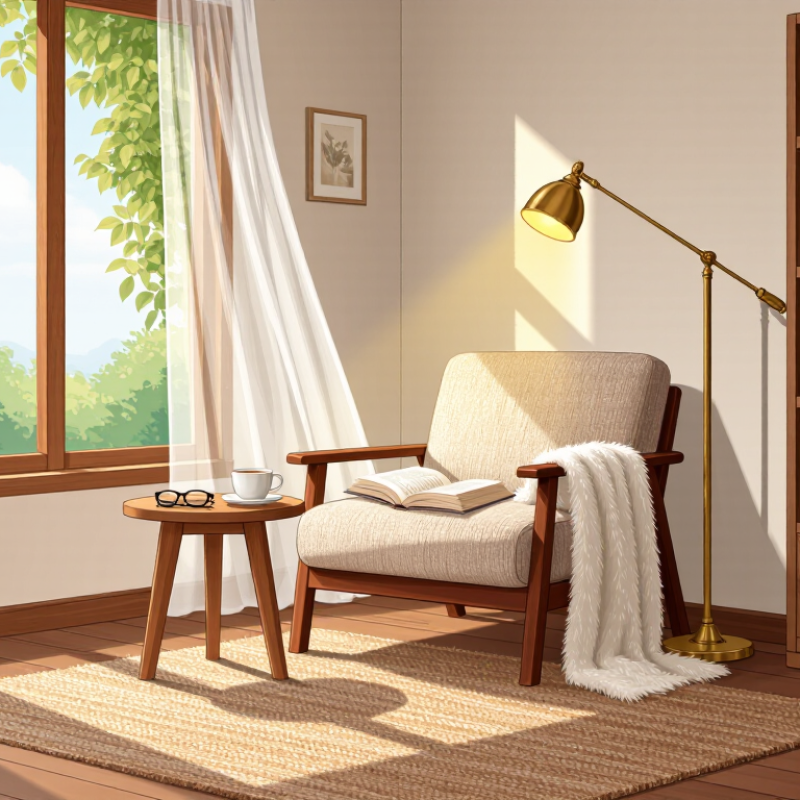
A cozy reading nook is more than a chair beside a bookshelf. It is a small, intentional zone that supports comfort, focus, and easy reading. The space should feel separate without becoming isolated. A wall corner, window seat, or quiet landing can work well. Comfort begins with proper support, not decorative cushions. Choose a seat that keeps your feet grounded and your shoulders relaxed. Add a soft throw, a firm cushion, and a nearby surface for tea or glasses.
Lighting defines the nook’s mood and usability. The Illuminating Engineering Society treats reading light as a visual-comfort concern, not merely decoration. Use layered light: gentle ambient light plus a focused lamp beside the reader’s shoulder. Avoid strong glare on glossy pages. Natural light helps during the day, but direct sunlight may fade fabric and create heat. Ventilation also matters. The U.S. Environmental Protection Agency reports that indoor pollutant levels can be two to five times higher than outdoor levels. Open a window when practical, and avoid heavily scented materials in a small corner.
A real reading nook should reduce friction. Keep two or three books within reach, rather than building a display that feels untouchable. Pew Research Center reported that 23% of U.S. adults had not read a book in any format during 2021. A welcoming nook cannot solve that habit alone. It can make starting easier. In my experience, the most beautiful corner often fails when the lamp is inconvenient or the seat feels too deep. Mine might still collect laundry. That is an honest design flaw.
What Is a Cozy Reading Nook and How to Create One?
A cozy reading nook is a small, dedicated place for reading, resting, and thinking. It does not need expensive furniture or a large room. Comfort begins with a supportive seat that keeps your back relaxed and your feet grounded. Natural light helps during the day, while a warm, adjustable lamp supports comfortable evening reading.
Key features include softness, quiet, and easy access to books. Add a cushion with firm support, a breathable blanket, and a small table for tea or notes. Keep the space free from clutter, but allow a few personal details, such as a framed print or a plant. In my experience, a chair that looks beautiful may still feel uncomfortable after twenty minutes. I once chose a deep seat and kept sliding forward. It looked inviting, but it was poorly suited for long reading sessions. A nook also needs suitable temperature control and enough space to change posture.
Tips: Test the seat before arranging the area. Read there for fifteen minutes. Notice your shoulders, neck, and lower back. Place the lamp beside you, not directly behind your head. Keep frequently used books within easy reach. If the nook feels too perfect, use it less. Real comfort often comes from practical choices, not decoration. Test and adjust.
What Is a Cozy Reading Nook and How to Create One?
A cozy reading nook starts with a location that supports focus, comfort, and safe lighting. Choose a quiet corner near a window, but avoid strong afternoon glare. The U.S. Environmental Protection Agency reports that indoor pollutant levels can be two to five times higher than outdoor levels. Its indoor air quality guidance also notes that people spend about 90% of their time indoors. Therefore, select a space with gentle airflow, reachable ventilation, and no damp walls. A closed alcove may look charming, yet stale air can quickly affect comfort.
Test the location before buying furniture. Sit there for fifteen minutes with a book and notice noise, temperature, and changing sunlight. Keep the chair away from radiators, busy doorways, and television reflections. Leave enough space to stand without hitting a table. A 300–500 lux reading light is commonly recommended for comfortable close work, but personal vision needs differ. This is easy to get wrong. A brighter lamp is not always better. My practical preference is adjustable, warm lighting beside the shoulder, not directly above the eyes.
Tips: Place a small side table within arm’s reach. Use a curtain to soften harsh daylight. Check the corner during morning and evening hours. If the nook feels perfect only at noon, reconsider its location. Add a firm cushion, but do not let softness hide poor posture or weak ventilation.
| Potential Location | Natural Light | Noise Level | Recommended Minimum Space | Comfort and Privacy | Best Use | Key Considerations |
|---|---|---|---|---|---|---|
| Corner of a Living Room | Moderate to high near a window | Medium | About 3 ft × 4 ft | Easy to define with a chair, rug, and floor lamp | Shared homes and compact layouts | Use a low bookcase or screen to visually separate the nook without blocking light. |
| Bay Window or Window Alcove | High during the daytime | Low to medium | About 3 ft × 5 ft | Strong sense of enclosure and a natural view | Daytime reading and relaxing | Add adjustable curtains or blinds to control glare and protect books from prolonged direct sunlight. |
| Quiet Bedroom Corner | Low to moderate | Low | About 3 ft × 4 ft | High privacy and fewer interruptions | Evening reading and winding down | Choose a warm, focused lamp and keep the seating away from the bed if you want the nook to feel like a separate activity zone. |
| Under a Staircase | Low unless near an opening | Low to medium | About 3 ft × 5 ft, depending on ceiling height | Cozy and enclosed, but headroom may be limited | Small homes and unused areas | Measure the highest and lowest ceiling points carefully; avoid placing seating where movement is restricted. |
| Home Office or Study Niche | Moderate | Low when the room is not in use | About 3 ft × 4 ft | Good privacy with a clear purpose | Focused reading and research | Keep the nook separate from the main desk to create a visual break from work-related tasks. |
| Landing or Wide Hallway | Moderate if near a window | Medium to high | At least 4 ft × 5 ft | Limited privacy and frequent foot traffic | Occasional reading in open-plan homes | Maintain a clear walking path and use slim furniture with rounded edges to reduce obstruction. |
| Enclosed Porch or Sunroom | Very high | Low to medium | About 4 ft × 5 ft | Bright and relaxing, with a strong connection to the outdoors | Long reading sessions and nature views | Plan for temperature changes, glare, and fabric fading; use layered window coverings when needed. |
| Unused Dining Room Corner | Moderate to high | Medium | About 3 ft × 4 ft | Comfortable but less secluded | Multi-purpose family spaces | Place the chair away from the main traffic route and use a small side table for books and a drink. |
A practical reading nook should provide comfortable seating, suitable lighting, easy access to books, and enough separation from household traffic to support uninterrupted reading.
A cozy reading nook is a small, dedicated place for reading, resting, and slowing down. It does not need a large room. A supportive armchair, compact side table, and soft footstool can create the foundation. Choose a seat with firm back support and enough depth for relaxed sitting. Leave about 30 to 36 inches of clear space around it, so the nook feels inviting rather than cramped.
Lighting matters as much as furniture. Place a warm task lamp beside your reading hand, with the shade slightly above eye level. A light around 3000K usually feels comfortable without making pages look dull. Add a second, softer light nearby to reduce harsh contrast at night. Natural light is helpful, but direct sunlight can fade fabrics and cause screen glare. Test the chair at different hours before fixing the layout.
Accessories should support comfort, not create clutter. Add one washable cushion, a breathable throw, and a shallow basket for books. A small plant can soften hard corners, though it may need more care than expected. My first reading nook looked attractive but lacked a place for my glasses, so I kept standing up. That mistake changed my setup: the table now holds a lamp, bookmark, water glass, and reading glasses without crowding the surface. Leave some empty space. It makes the nook easier to use.
A cozy reading nook is a small space designed for comfort, focus, and quiet enjoyment. Creating one begins with choosing a corner that receives gentle daylight. Avoid harsh glare, especially near a window. Measure the area before buying furniture, and leave enough room to stand easily. A supportive chair should keep your feet flat and your shoulders relaxed. For longer reading sessions, change your posture occasionally. Comfort is not only softness.
Place the seat beside a stable lamp with adjustable brightness. Warm, even light reduces eye strain during evening reading. Add a narrow table for tea, glasses, or a notebook. Keep books within reach, but avoid stacking them dangerously high. A washable cushion and breathable throw can add warmth without making the space feel crowded. Keep electrical cords secured along the wall. Small details matter. My first nook looked beautiful, but the lamp sat too far away, which made reading uncomfortable.
Personalize the nook with objects that support your reading habits. Display a few favorite books, a small plant, or artwork with calming colors. Use a basket for current books and loose notes. Leave some empty space for new discoveries. Test the arrangement for several days before making it permanent. You may notice noise, weak lighting, or an awkward table height. Fix one issue at a time. The perfect nook may need revision.
A cozy reading nook is a dedicated corner designed for comfortable, focused reading. Use the lighting levels below as practical reference points, then personalize the seating, textures, storage, and atmosphere to suit your habits.
1. Choose a quiet location: Select a corner near natural light while avoiding glare on the pages.
2. Add layered lighting: Keep ambient light soft and use an adjustable task lamp for focused reading. General reading commonly uses about 300 lux, while detailed close-up work may need about 500 lux.
3. Prioritize comfort: Choose supportive seating, add a footrest or cushion, and keep frequently used books within easy reach.
4. Personalize the atmosphere: Add a small side table, a soft throw, calming colors, and a basket for books or accessories.
Lighting values are practical reference levels; the ideal brightness depends on age, eyesight, room color, glare, and personal preference.
It is a small, intentional area for comfortable and focused reading. A chair, quiet corner, and useful lighting can define it. It should feel separate, not completely isolated.
Choose a corner with gentle daylight and limited noise. A wall corner, window seat, or quiet landing may work well. Avoid direct sunlight that creates heat or fades fabrics.
Select a chair that keeps your feet flat on the floor. Your shoulders should remain relaxed while sitting. A deep, soft seat may still cause discomfort during long sessions. Comfort is not softness.
Combine gentle ambient light with a focused lamp near your shoulder. Adjustable brightness helps during evening reading. Keep the light away from glossy pages to reduce glare. A beautiful lamp can still be inconvenient.
Place a narrow table nearby for tea, glasses, or a notebook. Keep two or three books within easy reach. A basket can hold current books and loose notes. Small details matter.
Open a window when practical to improve ventilation. Avoid heavily scented materials in a small corner. Secure electrical cords along the wall. A washable cushion and breathable throw are practical additions.
Display a few favorite books, a small plant, or calming artwork. Leave some empty space for future discoveries. Choose objects that support your actual reading habits. Decoration should not make the books untouchable.
Use the arrangement for several days before making it permanent. Notice weak lighting, nearby noise, or an awkward table height. Change one problem at a time. Test it for days. The perfect nook may need revision, and mine might still collect laundry.
A cozy reading nook is a dedicated corner designed to make reading feel relaxing, comfortable, and personal. It typically includes a supportive seat, soft textures, suitable lighting, and a calm atmosphere. When choosing a location, look for a quiet area with enough natural light, minimal distractions, and space for a small table or storage. A corner near a window, beside a bookcase, or in an unused part of a bedroom or living room can work well.
To understand how to create a cozy reading nook with a lounge chair, begin by positioning the chair where you can read comfortably without glare or interruptions. Add a soft cushion, warm throw, footrest, and side table for books and drinks. Use an adjustable lamp or layered lighting for evening reading, then personalize the space with a small rug, artwork, plants, or meaningful objects. Keep the area organized and uncluttered so it remains inviting and easy to enjoy every day.
