Teak wood outdoor loungers can look effortless, but their durability depends on regular, informed care. Learning how to maintain teak wood outdoor loungers starts with understanding the timber itself. Teak contains natural oils that resist moisture, insects, and outdoor decay. However, sunlight gradually turns its golden surface silver-gray. That change is normal, not necessarily damage.
Wood scientist Dr. Mark Knaebe of the USDA Forest Products Laboratory offers a useful principle: “Finishes cannot prevent weathering; they only slow it.” This reminder helps owners choose realistic maintenance goals. A soft brush, mild soap, and clean water usually remove dust, pollen, and bird residue. Avoid pressure washers. They can raise the grain and leave rough strips around the armrests. Let the lounger dry completely before adding cushions or applying any approved teak treatment.
Inspect the joints, wheels, and underside every few months. These areas often hold damp leaves longer than the visible surfaces. Light sanding can refresh uneven patches, but aggressive sanding removes character and valuable wood. I have found that many maintenance problems begin with over-cleaning, not neglect. That is worth reconsidering. Some owners apply thick furniture finishes, expecting permanent protection. Outdoor teak rarely rewards that approach. A breathable teak sealer may preserve color, yet it demands careful preparation and repeated applications. This guide will explain cleaning, drying, sanding, sealing, storage, and seasonal inspection in practical steps. The goal is simple: preserve comfort, structural strength, and the lounger’s natural appearance.
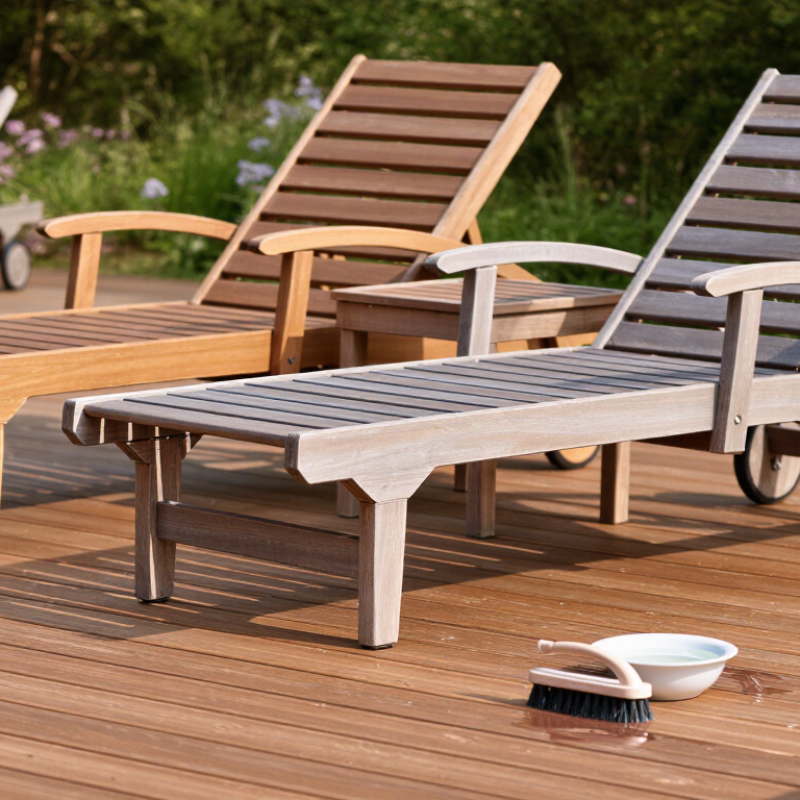
How to Maintain Teak Wood Outdoor Loungers?
Identify teak before choosing a care routine. Genuine teak usually has a straight, interlocked grain, warm golden-brown color, and a slightly oily touch. The U.S. Forest Products Laboratory’s Wood Handbook records teak at about 0.55 specific gravity at 12% moisture content. This density helps explain its outdoor strength. However, appearance alone cannot confirm species. I once assumed every golden hardwood was teak. That was careless.
Teak naturally weathers to silver-gray under sunlight. This change is cosmetic, not immediate damage. Wash loungers every few months with pH-neutral soap, clean water, and a soft-bristle brush. Follow the grain. Avoid aggressive pressure washing, which can raise the surface fibers. Let the wood dry fully before using a breathable cover. Inspect joints, screw heads, and end grain after heavy rain. The USDA Wood Handbook also explains that outdoor moisture changes repeatedly, causing wood movement. Small checks may appear. They deserve monitoring, not panic. Teak oil is optional, but it can darken the surface and encourage uneven staining when applied poorly.
Tips: Remove leaves before they trap moisture. Use a fabric cover, not sealed plastic. Wipe spills quickly. Sand lightly only when the surface feels rough. Test any cleaner beneath the seat first. Keep loungers level, so water does not collect around the legs. A seasonal inspection is usually enough, though coastal air may demand more frequent cleaning.
Before cleaning, move the teak lounger onto a dry, shaded surface. Place a towel beneath each leg. This prevents grit from scratching the floor and helps reveal loose joints. Remove cushions, covers, and detachable hardware. Shake cushions outdoors, then inspect their seams for trapped sand or mildew.
Examine every slat, armrest, and corner by hand. Look for lifted grain, hairline splits, dark moisture marks, rust stains, and wobbling fasteners. The USDA Forest Products Laboratory’s Wood Handbook reports teak shrinkage of about 2.6% radially and 5.8% tangentially as wood dries. That movement is modest, but repeated wetting can still loosen joints over time. Do not ignore a small crack. It may widen under someone’s weight.
Use a soft brush to remove dry dust before adding water. A camera helps record existing marks, especially beneath the seat and around end grain. I once overlooked a damp patch under a crossbar; it was not serious, but the mistake delayed repair. Check the lounger after rain, not only on a sunny day. Moisture readings are useful when available. The USDA Wood Handbook identifies moisture changes as a major cause of wood movement. Avoid cleaning a surface that still feels cold and wet. Let it dry first. Pushing ahead feels efficient, but it can hide defects and spread grime into open grain.
Teak wood outdoor loungers tolerate sun and rain, but their surfaces still need gentle care. I usually remove cushions first, then brush away loose sand and leaves with a soft, dry brush. Small grit can scratch the wood during washing.
Use lukewarm water and a small amount of mild soap. Work along the wood grain with a soft nylon brush or sponge. Avoid wire brushes, strong bleach, and abrasive powders. They can strip the surface unevenly and leave pale marks. Rinse thoroughly, because dried soap attracts dirt. Do not aim a powerful pressure washer at the lounger. It may raise the grain and force water into joints.
Let the lounger dry completely in a shaded, well-ventilated place. Direct midday sunlight can create uneven color while wet areas dry. I once cleaned a teak chair too aggressively, expecting a brighter finish. The surface looked rough afterward, and sanding became necessary. That mistake was avoidable.
Weathered teak naturally changes from warm brown to silver gray. This color change does not mean the wood is failing. If you prefer the original tone, use a teak-specific maintenance product and test it beneath the seat first. Never apply oil to damp or dirty wood. Clean the lounger gently every few months, especially after dusty weather or heavy rain. Inspect cracks, joints, and fasteners during each cleaning. A careful routine preserves the wood without treating it like indoor furniture.
Suggested maintenance intervals for cleaning teak surfaces without damaging the wood.
Use a soft brush and mild soapy water for routine cleaning. Avoid high-pressure washing, harsh chemicals, and abrasive tools that can damage the wood surface.
Teak loungers face rain, sunlight, pollen, and food spills every season. Inspect the wood after wet weather, especially around joints and the seat slats. Remove fresh stains quickly with a cloth dampened in clean water. For grease or drink marks, use warm water and a small amount of mild soap. Scrub gently with a soft-bristled brush, following the grain. Rinse thoroughly, then let the lounger dry completely in moving air. Do not trap moisture beneath cushions.
Older stains need patience. Mix mild soap with water, and test the solution beneath the lounger first. A stiff brush can roughen the surface and leave visible scratches. Avoid strong bleach, metal brushes, and aggressive pressure washing. These methods may remove dirt quickly, but they can damage the softer wood between teak’s dense grains. Bird droppings deserve prompt attention because they may mark the surface after drying. Wear suitable gloves while cleaning, and wash your hands afterward.
Early weathering appears as faded color, tiny surface cracks, or a dry, raised grain. Teak naturally changes from warm brown to silver-gray outdoors. That color is not automatically damage. I once scrubbed too hard while trying to restore a newer appearance, and the surface looked uneven afterward. That mistake taught me to clean lightly and accept some aging. If cracks deepen, fasteners loosen, or water remains in one area, stop cosmetic treatment and arrange a professional inspection.
Teak wood outdoor loungers can handle sun and rain, but they still need regular care. Brush away sand, leaves, and food crumbs each week. Use mild soap, warm water, and a soft nylon brush. Scrub along the grain, then rinse thoroughly. Let the lounger dry fully before adding cushions. Trapped moisture can encourage mildew in shaded joints. Avoid pressure washers; they can roughen the surface and open the grain. I once cleaned too aggressively, and raised fibers remained visible for months. That mistake taught me to use less force.
Protection changes with the season. In dry, sunny weather, place the lounger where afternoon shade is available. A breathable cover can reduce dust and bird droppings, but never seal damp wood underneath. Check the cover after storms. Airflow matters. If the surface becomes pale silver, the wood is usually weathering naturally, not failing. Apply teak oil only when a consistent golden color is essential. Oil may require frequent renewal and can attract dirt. Test any cleaner on an unseen area first.
Before winter, wash the frame and inspect screws, joints, and adjustable hinges. Tighten loose hardware carefully, without crushing the wood. Store the lounger under a roof, raised from wet concrete. Keep cushions indoors in a dry, ventilated room. Do not stack heavy items on the frame. In spring, inspect for cracks, stains, or swollen joints. Small problems are easier to correct early. Keep it simple. Some discoloration may remain, and perfection is not always practical.
| Maintenance Area | Recommended Frequency | Action to Take | Materials or Tools | Important Precautions |
|---|---|---|---|---|
| Routine Dust Removal | Weekly or as needed | Brush away leaves, dirt, and sand from the slats, joints, hinges, and reclining mechanism. | Soft-bristle brush or dry microfiber cloth | Remove trapped grit before moving or folding the lounger to reduce surface scratching. |
| General Cleaning | Every 1–3 months and after heavy use | Wash the wood with clean water and a mild soap solution. Gently scrub along the grain, rinse thoroughly, and allow the lounger to dry completely. | Mild liquid soap, soft nylon brush, sponge, and clean water | Do not use abrasive pads, strong solvents, or a high-pressure washer, which can damage the wood surface. |
| Mildew and Organic Stains | When visible or after prolonged damp weather | Clean the affected area with a suitable outdoor-wood cleaner, rinse well, and dry the lounger in a ventilated location. | Outdoor teak cleaner, soft brush, gloves, and clean water | Test any cleaner on a concealed area first and follow the product instructions. |
| Natural Color Protection | Once or twice yearly, if desired | Apply a product specifically labeled for exterior teak only after the wood is clean and completely dry. | Exterior teak sealer, clean cloths, and disposable gloves | Teak can weather naturally from honey brown to silver gray. Avoid applying finish over dirt, moisture, or old flaking coatings. |
| Surface Smoothing | Only when the surface feels rough or develops raised fibers | Lightly sand rough areas in the direction of the grain, then remove all dust before cleaning or sealing. | Fine-grit sandpaper, dust mask, and microfiber cloth | Use gentle pressure. Excessive sanding can change the shape of slats and edges. |
| Hardware and Moving Parts | Every 3–6 months | Inspect screws, bolts, hinges, wheels, and adjustable supports. Tighten loose fasteners and remove accumulated dirt. | Appropriate screwdriver or wrench, cloth, and exterior-rated lubricant if required | Do not overtighten fasteners, as this may restrict movement or split the surrounding wood. |
| Fabric, Cushions, and Covers | Monthly during regular use | Shake out debris, clean according to the care label, and dry cushions fully before placing them back on the frame. | Soft brush, mild detergent, and breathable protective cover | Avoid covering a damp lounger. Use a breathable cover rather than airtight plastic for extended protection. |
| Sun and Rain Protection | Continuously; review before severe weather | Position the lounger on a stable, well-drained surface and use shade or a breathable cover during extended periods of intense sun or rain. | Shade structure, furniture cover, and level supports | Allow airflow around the lounger and prevent standing water from collecting beneath the legs. |
| Seasonal Storage | Before winter, storms, or extended non-use | Clean and dry the lounger, fold or disassemble it if designed to do so, and store it in a dry, ventilated, sheltered area. | Dry storage space, breathable cover, and protective pads | Do not store wet wood in a sealed container. Keep the lounger away from heating appliances and direct contact with damp floors. |
| Annual Safety Inspection | At the beginning and end of each outdoor season | Check for cracks, loose joints, sharp edges, unstable legs, corrosion, and damaged reclining components before use. | Inspection checklist, cloth, and basic hand tools | Stop using the lounger if its frame or locking mechanism is compromised until it has been properly repaired. |
Genuine teak often has straight or interlocked grain, a warm golden-brown color, and a slightly oily touch. Appearance alone is not proof. I once mistook another golden hardwood for teak. That was careless.
Sunlight naturally changes teak from golden brown to silver-gray. This is usually cosmetic weathering, not immediate structural damage. The surface may still remain strong.
Clean it every few months, or more often near the coast. Remove leaves and sand weekly. Use mild soap, clean water, and a soft brush.
Wipe fresh spills with a damp cloth quickly. For grease or drinks, use warm water and mild soap. Brush gently along the grain. Rinse well, then allow complete drying.
Avoid aggressive pressure washing, metal brushes, strong bleach, and stiff scrubbing. These methods can raise fibers and scratch softer areas. I once scrubbed too hard. The surface stayed uneven for months.
Teak oil is optional, not essential. It can preserve a golden appearance, but it may darken the surface unevenly. Oil can also attract dirt and require frequent renewal. Test carefully.
Use a breathable fabric cover, never sealed plastic over damp wood. Store the lounger under a roof and raise it above wet concrete. Keep cushions indoors, dry, and ventilated.
Watch for deepening cracks, loose screws, swollen joints, raised grain, or standing water. Small checks usually need monitoring, not panic. Arrange professional inspection when structural problems appear. Some discoloration may remain. That is normal.
Learning how to maintain teak wood outdoor loungers begins with understanding the wood’s natural oils, strength, and response to sun, moisture, and changing temperatures. Before cleaning, remove cushions and accessories, then inspect the lounger for dirt, loose hardware, cracks, mildew, or early signs of wear. Gently clean the surface with mild soap, clean water, and a soft brush, always working with the grain and avoiding harsh chemicals or abrasive tools that may damage the wood.
For stains or weathering, address the affected area early with careful spot cleaning and light sanding only when necessary. After cleaning, allow the lounger to dry completely before applying a suitable protective treatment, if desired. Keep the lounger covered or stored in a dry, ventilated place during severe weather, while avoiding trapped moisture. Regular inspections, prompt cleaning, tightened fittings, and seasonal care will help preserve its appearance, comfort, and outdoor durability throughout the year.
