How to Style a Modern Home Bar Area?

Time:2026-10-19 Author:Isabella
0%

A modern home bar should feel intentional, not like a showroom display. The best spaces balance useful storage, comfortable lighting, and a little personal character. That is the foundation of how to style a modern home bar area.

Interior designer Nate Berkus often says, “Your home should rise up to greet you.” His idea suits a home bar perfectly. The space should welcome guests, support easy serving, and still feel connected to the rest of the room. A slim oak cabinet, a stone counter, and warm under-shelf lighting can create that effect without overwhelming a small apartment. Keep everyday glassware within reach. Store less-used pieces behind closed doors.

Scale matters. A bar cabinet placed beneath a large artwork may look balanced, while the same cabinet can feel cramped beside a bulky sofa. Measure the wall, walking path, and door clearance before buying furniture. Leave enough counter space for a mixing glass, an ice bucket, and two clean glasses. Safety matters too. Choose stable shelves, rounded edges, and properly installed lighting. Keep the area away from children’s reach, and follow local electrical and building requirements.

Not every stylish choice works in practice. Open shelving may collect dust. Dark finishes can show fingerprints. I have learned that visual drama sometimes creates daily maintenance. A practical modern bar should look refined, but it should also survive real evenings, small spills, and changing routines. Good design leaves room for reflection, adjustment, and personal use.
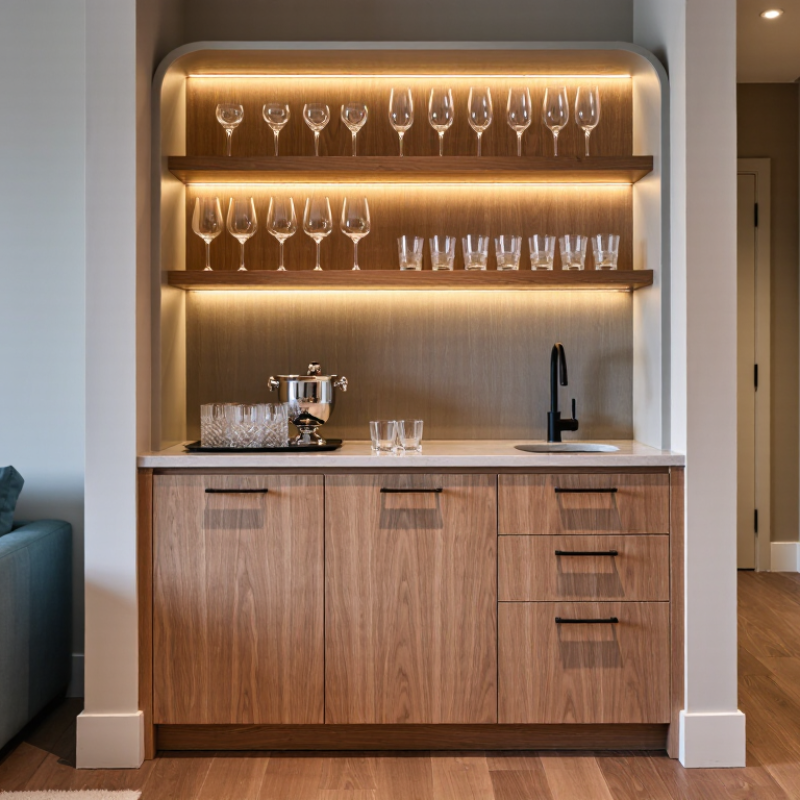
How to Style a Modern Home Bar Area?

Define the Purpose and Layout of Your Modern Home Bar

Define the Purpose and Layout of Your Modern Home Bar

A modern home bar should solve a clear problem. Will it support morning coffee, evening refreshments, or relaxed hosting? Combining every function can create clutter. A focused purpose makes the layout easier to plan and maintain.

Begin with a simple activity map. Place preparation space beside storage, then keep serving space near the room’s seating area. The 2024 Houzz U.S. Kitchen Trends Study reported that 76% of homeowners upgraded cabinets during major renovations. This suggests that concealed storage remains a practical priority, not merely a visual preference. Use deep drawers for glassware, adjustable shelves for bottles, and one open shelf for frequently used items. Keep electrical outlets accessible, but avoid placing them directly above wet areas. Safety should shape the design.

Scale matters. The National Kitchen & Bath Association’s 2024 Design Trends Research identifies beverage stations as an increasingly requested residential feature. A compact bar can work in a 1.2-meter wall zone, while larger rooms may support a peninsula with two working sides.

Leave clear circulation around stools and doors. I once planned a beautiful narrow counter that blocked a cabinet when opened. It looked refined. It worked poorly. Recheck door swings, reach distances, and cleaning access before finalizing the drawings.

Choose durable, easy-clean surfaces, because real entertaining is rarely spotless.

Choose a Contemporary Bar Structure and Essential Features

A modern home bar begins with a clear structure, not a crowded collection of accessories. I prefer a straight counter for narrow rooms and an L-shaped layout for larger spaces. Keep the counter about 90 centimeters high for comfortable serving and preparation. Leave enough knee space beneath the surface. Otherwise, the area may look refined but feel awkward.

Choose durable materials with different textures. A stone or sealed wood countertop handles daily spills and warm cups. Flat-panel cabinets create a clean appearance without wasting visual space. Include adjustable shelves for glasses, a drawer for tools, and closed storage for napkins and cleaning supplies.

A small sink adds convenience, especially when the bar sits far from the kitchen. It also encourages better hygiene.

Lighting needs several layers. Use soft overhead light, focused task lighting, and gentle illumination inside open shelves. Avoid placing bright lights directly behind seating. They can create glare and make faces look harsh. I once planned a beautiful open display, but dust quickly became the main feature. Closed cabinets would have been wiser. Ventilation also matters when appliances produce heat. Add outlets near the counter, but keep cords away from water. A slim foot rail improves comfort during longer conversations. Do not overfill the structure. Empty space gives the bar a calmer, more contemporary character.

Select Materials, Colors, and Furniture for a Cohesive Look

A modern home bar feels intentional when its materials, colors, and furniture share a clear visual language. Start with two dominant materials and one supporting texture. For example, combine warm oak, honed stone, and brushed metal. Oak softens the space, while stone adds durability around spills and glassware. Brushed finishes hide fingerprints better than highly polished surfaces.

Choose a restrained color palette before buying furniture. A deep green or charcoal base can create intimacy without making a small room feel closed. Add one lighter shade through stools, shelving, or wall paint. Keep the undertones consistent. Warm wood beside icy gray can look accidental. Test samples under daytime and evening lighting. Colors often change more than expected.

Furniture should support both movement and conversation. Leave at least 36 inches behind stools for comfortable passage. Select seats with supportive backs, but avoid oversized shapes that crowd the counter. Open shelving keeps bottles and glasses accessible, while closed storage hides less attractive equipment. I once chose shelves that looked elegant but collected dust quickly. That mistake taught me to value cleaning access as much as appearance. A small lamp with warm light can make the counter inviting. Still, too much lighting creates glare on stone. Balance matters.

Plan Lighting, Storage, and Practical Bar Accessories

How to Style a Modern Home Bar Area?

A modern home bar needs planned lighting, storage, and practical accessories. Start with layered illumination: use soft ceiling light, under-shelf strips, and a focused task light near the preparation area.

The U.S. Department of Energy reports that LED lighting uses at least 75% less energy and lasts up to 25 times longer than incandescent bulbs.

Choose warm, dimmable lighting to make glassware sparkle without creating harsh reflections. Keep it reachable. Place frequently used tools between waist and shoulder height.

Storage should support real habits, not just photographs. The 2024 NKBA Design Trends Report tracks beverage stations as a distinct planning feature, reflecting their growing role in residential layouts.

Use shallow drawers for openers, strainers, napkins, and measuring tools. Add vertical dividers for bottles, but leave space for different shapes. A narrow pull-out shelf can hold mixers while keeping the main counter clear.

Measure twice.

Practical accessories make the area safer and easier to maintain. Select a washable tray, a non-slip mat, sealed containers, and a small waste bin.

Include a nearby outlet for approved countertop appliances, but avoid overcrowding the backsplash.

In my own planning experience, open shelving looked attractive but collected dust quickly. It also made clutter visible. A few shelves may be enough. Reconsider convenience before decoration, especially when guests use the space without instruction.

Add Decorative Details That Reflect Your Personal Style

A modern home bar should reveal your personality, not resemble a showroom. Start with one meaningful object, such as a ceramic tray, framed travel sketch, or hand-thrown vase. Repeat its color in two smaller details, like linen napkins and a nearby cushion. This creates visual connection without forcing everything to match. Leave breathing room. Crowded shelves quickly lose their character.

Use materials that feel pleasant to touch. Ribbed glass, walnut, brushed metal, and textured stone add depth under soft lighting. The ENERGY STAR program reports that certified LED lighting uses at least 75% less energy and lasts up to 25 times longer than traditional incandescent lighting. Install warm, dimmable LEDs beneath shelves or inside cabinets. They highlight glassware without making the area feel harsh.

Professional execution also protects the decorative idea. The 2024 U.S. Houzz & Home Study reports that about nine in ten renovating homeowners hire professionals for at least one project task. An electrician can position lighting safely, while a cabinet specialist can prevent awkward gaps around appliances. In my experience, the best bar areas include one imperfect detail: a slightly uneven artwork arrangement or a bowl of seasonal citrus. I once over-styled a shelf and removed half the objects later. It looked better, but I still wonder whether I removed too much personality. Keep practical items visible, including coasters, bottle openers, and non-alcoholic mixers. Personal style should support everyday use, not interrupt it.

FAQS

What should a modern home bar be designed to do?

Choose one main purpose, such as coffee, refreshments, or hosting. Combining everything can create clutter. Keep the goal clear.

How should the bar layout be organized?

Place preparation space beside storage. Keep serving space near seating. Leave clear paths around stools, doors, and cabinets.

How much space does a compact home bar need?

A compact bar can fit within a 1.2-meter wall zone. Check door swings and cleaning access carefully. Small spaces punish mistakes.

What counter height works well for a home bar?

A counter near 90 centimeters usually supports comfortable preparation and serving. Include enough knee space below. Otherwise, it may feel awkward.

Which storage features are most useful?

Use deep drawers for glassware and shallow drawers for tools. Add adjustable shelves for bottles and vertical dividers for different shapes. Measure twice.

Should a home bar include a sink?

A small sink helps when the bar sits far from the kitchen. It supports easier rinsing and better hygiene. Plumbing can complicate the project, though.

What lighting works best in a modern home bar?

Combine soft overhead lighting, focused task lighting, and gentle shelf illumination. Warm, dimmable light reduces glare. Keep bright lights away from faces.

Which materials and accessories make the bar easier to maintain?

Choose sealed wood or stone surfaces, washable trays, and non-slip mats. Add sealed containers and a small waste bin. Dust still wins sometimes.

How can open shelving be used without creating clutter?

Reserve one open shelf for frequently used items. Store cleaning supplies and less attractive tools behind closed doors. Open shelves look good until dust appears.

What safety details should be checked before installation?

Keep outlets away from wet areas and cords away from water. Confirm appliance ventilation and cabinet clearance. A beautiful blocked door remains a bad design.

Conclusion

Learning how to style a modern home bar area begins with defining its purpose, available space, and ideal layout. Decide whether the bar will support casual drinks, entertaining, or simply add visual interest to the room. Choose a clean contemporary structure with practical features such as a durable counter, comfortable seating, useful work space, and organized storage. A cohesive look can be created by combining materials like wood, stone, metal, or glass with a restrained color palette and furniture that complements the surrounding interior.

Lighting, storage, and accessories should balance style with everyday convenience. Use layered lighting to create atmosphere while keeping the counter easy to use, and include shelves, cabinets, or drawers for glassware and tools. Finally, personalize the area with artwork, decorative objects, textured finishes, or carefully selected glassware. The best approach to how to style a modern home bar area is to combine simplicity, function, and personal character without making the space feel crowded.

Isabella

Isabella

Isabella is a dedicated marketing professional with a sharp focus on driving brand growth and engagement through strategic content creation. With an extensive background in digital marketing, she combines her passion for storytelling with her keen understanding of industry trends to deliver......