Why Choose Aluminum Over Steel for Beach Furniture?

Time:2026-10-14 Author:Oliver
0%

Choosing beach furniture is not only about appearance. Salt air, wet towels, blowing sand, and strong sunlight can quickly expose weak materials. After repeated use near the coast, many furniture owners notice rust stains around steel joints and fasteners. Aluminum usually offers a lighter, more practical alternative for these conditions.

This guide explores why you should choose aluminum over steel for beach furniture. Aluminum frames are easier to carry across soft sand, especially when one person handles several chairs. They also resist corrosion naturally because aluminum forms a protective oxide layer. This does not make aluminum completely maintenance-free. Scratches, poor coatings, and low-quality hardware can still create problems.

Steel can provide excellent strength and a stable, substantial feel. However, it often requires better protective finishes and regular inspection near saltwater. A small coating failure may become visible as bubbling paint or orange corrosion. Aluminum furniture generally moves more easily and dries faster after unexpected rain. That matters during beach events, outdoor cafés, and family gatherings.

Material quality still matters.

Not every aluminum product performs equally well. Thin frames may bend under heavy loads, while poorly designed joints can loosen over time. Look for reinforced connections, corrosion-resistant hardware, stable powder coating, and clear weight ratings. These details support a more reliable decision than marketing language alone.

Aluminum is not always the perfect choice. Steel may suit windy locations or furniture requiring extra structural weight. Still, for many coastal settings, aluminum combines portability, corrosion resistance, and easier maintenance. A careful comparison helps match the material with real weather exposure and everyday use.
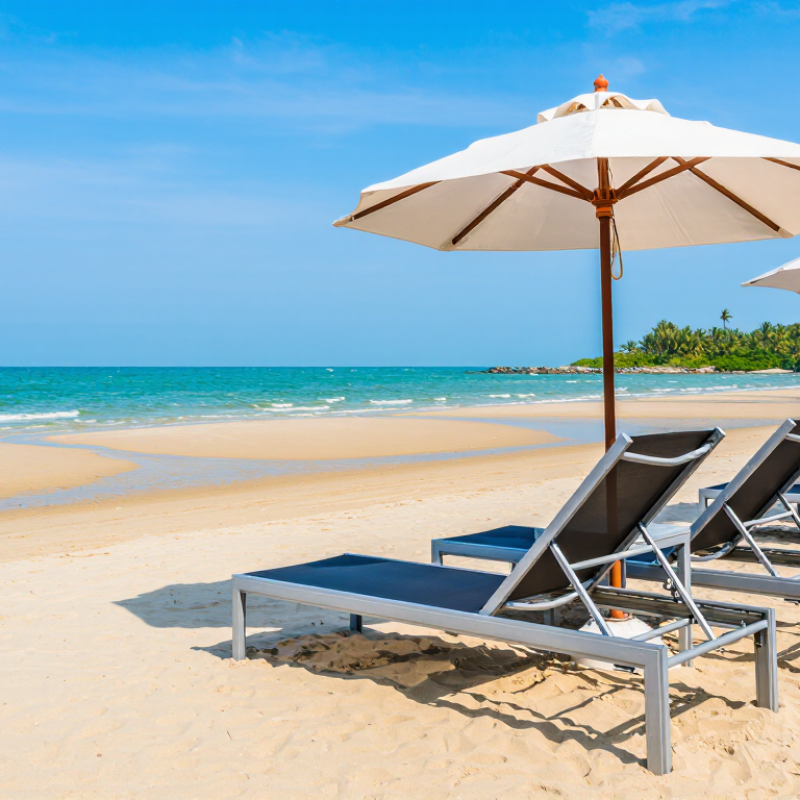
Why Choose Aluminum Over Steel for Beach Furniture?

Aluminum’s 2.7 g/cm³ Density Versus Steel’s 7.85 g/cm³

Why Choose Aluminum Over Steel for Beach Furniture?

Aluminum’s density is about 2.7 g/cm³, while steel measures approximately 7.85 g/cm³. This difference is nearly threefold, according to engineering data compiled by ASM International. A beach chair built with aluminum can therefore be moved more easily across soft sand. That matters when carrying several chairs from a car to the shoreline. Less weight also reduces strain during daily setup and storage.

Practical experience supports the calculation. Aluminum frames feel easier to lift, especially when sand sticks to the feet. They are also less likely to leave deep tracks during repositioning. The International Aluminium Institute reports aluminum’s strong recyclability and established recovery systems. However, lightness is not the same as strength. Designers must use suitable tube shapes, wall thicknesses, and joints. A poorly designed frame can flex unpleasantly in coastal wind.

Steel still offers greater stiffness and often a lower initial material cost. Yet exposed steel can develop rust when salt, moisture, and scratches meet. Protective coatings help, but damaged areas need attention. I would not claim aluminum is maintenance-free. Fasteners can corrode, and thin sections may dent after rough handling. The choice becomes more balanced when transport effort, coastal exposure, and long-term upkeep are measured together.

How Aluminum’s ASTM B117 Corrosion Resistance Benefits Beach Furniture

Why Choose Aluminum Over Steel for Beach Furniture?

Beach furniture faces salt spray, wet towels, sand, and repeated drying. Aluminum develops a thin oxide layer that slows further surface attack. Steel usually needs intact paint, plating, or powder coating for similar protection. Once scratches expose steel, red rust can spread beneath the finish. That matters around chair joints, screw holes, and welded corners. Field experience shows these small areas often fail first.

ASTM B117 provides a controlled salt-spray test for comparing corrosion performance. It does not predict an exact outdoor service life. Results depend on alloy, coating, thickness, pretreatment, and inspection rules. AMPP guidance also warns that laboratory salt spray cannot fully reproduce coastal weathering. Still, a 500-hour or 1,000-hour result can reveal weak finishes before installation. Ask for the tested system, not just the test number.

The NACE IMPACT study estimated global corrosion costs at 2.5 trillion dollars annually, equal to about 3.4% of global GDP. Better material selection can reduce maintenance, replacement, and downtime. Aluminum’s lower density also makes daily relocation easier on decks and sandy paths. However, it is not maintenance-free. Trapped salt can attack fasteners, especially when dissimilar metals touch. Rinsing with fresh water helps. I would also inspect drainage holes more carefully; a beautiful frame can still fail where water quietly remains.

Aluminum has a density of approximately 2.70 g/cm³, compared with about 7.85 g/cm³ for carbon steel, making aluminum beach furniture significantly lighter. In ASTM B117 neutral salt-spray testing, aluminum’s naturally forming oxide layer can help limit general surface corrosion, while uncoated steel is more vulnerable to visible rust in chloride-rich conditions. ASTM B117 is a test method rather than a universal pass/fail rating, so actual performance depends on alloy, surface treatment, joints, and maintenance.

Aluminum’s 100% Recyclability and Lower Material Weight

Aluminum’s 100% recyclability gives beach furniture a practical circular advantage. The International Aluminium Institute reports that aluminum can be recycled repeatedly without losing its core properties. Recycled aluminum also requires up to 95% less energy than primary production. That difference matters when chairs, loungers, and tables reach the end of their service lives. They can re-enter manufacturing instead of becoming permanent waste.

Weight is another important factor on sandy sites. Aluminum has a density of about 2.7 g/cm³, while steel measures near 7.85 g/cm³. For similar designs, aluminum components can be roughly one-third as heavy. Staff can move stacked chairs more easily. Guests can carry a small table across hot sand without dragging it. Less weight may also reduce transport fuel use, although the final result depends on thickness, packaging, and delivery distance.

It is not perfect. Aluminum production from raw ore remains energy-intensive, and thin frames may dent more easily. I have found that poorly designed lightweight furniture feels unstable in strong coastal winds. Material choice alone cannot solve that problem. Designers need wider feet, sound joints, and corrosion-resistant finishes. The International Aluminium Institute also notes that recycling rates depend on collection systems and product recovery. In other words, “100% recyclable” describes the material, not a guaranteed recycling outcome. Strong take-back channels make the claim more credible.

Comparing Aluminum and Steel’s Coastal Maintenance Requirements

Why Choose Aluminum Over Steel for Beach Furniture?

Coastal air exposes furniture to salt, moisture, sand, and strong sunlight. In my experience, aluminum usually needs less maintenance than ordinary steel near the beach. It does not develop red rust when its surface is scratched. However, salt can still cause oxidation, pitting, and dull patches. Aluminum is also lighter, making chairs easier to move after windy weather. That convenience matters on decks and sandy patios.

Steel feels heavier and more stable, especially during sudden gusts. Its protective coating can perform well, but scratches deserve quick attention. Exposed steel may rust around joints, bolts, and drainage holes. I once underestimated sand trapped beneath a steel frame. After repeated wet conditions, that hidden grit damaged the finish faster than expected. Aluminum is not maintenance-free either. Its fasteners can corrode, and white residue may appear in salty environments.

Tips: Rinse both materials with fresh water every few weeks. Dry the joints with a soft cloth. Check coating damage before the rainy season. Avoid abrasive pads, which can create tiny scratches. For steel, repair exposed areas promptly with a suitable outdoor coating. For aluminum, inspect connectors and remove salt buildup around seams. A shaded storage area helps both materials, although I have found that regular cleaning matters more than expensive covers.

Aluminum’s Strength-to-Weight Ratio in Outdoor Furniture Design

Why Choose Aluminum Over Steel for Beach Furniture?

Aluminum’s strength-to-weight ratio makes it highly practical for beach furniture design. A well-engineered aluminum frame can support daily seating loads without feeling difficult to carry. This matters when furniture must move across loose sand, wooden walkways, or uneven ground. In outdoor product evaluations, lighter frames usually reduce lifting strain and setup time. They also make it easier for one person to reposition a chair near changing shade.

Weight does not tell the whole story. Alloy selection, tube shape, wall thickness, fasteners, and joint design determine real strength. A narrow aluminum tube can bend when poorly engineered. A reinforced frame can remain stable under repeated use, though it may still feel less rigid than steel. That trade-off deserves honest attention. Aluminum naturally resists rust, but salt, sand, and trapped moisture can still damage finishes and connections. Rinsing the frame with fresh water helps, especially after a windy coastal day. Protective caps and drainage openings are useful details. Small details matter.

Steel can offer impressive rigidity and impact resistance, yet its greater weight makes beach handling less convenient. Aluminum provides a balanced option for chairs, loungers, and portable tables when designers control flex carefully. Some users may prefer a heavier feel in strong wind. Others value easy movement more. The best choice depends on frame geometry, expected loads, and maintenance habits—not material labels alone.

Why Choose Aluminum Over Steel for Beach Furniture? - Aluminum’s Strength-to-Weight Ratio in Outdoor Furniture Design

Design and Performance Factor Aluminum for Beach Furniture Steel for Beach Furniture
Typical Density Approximately 2.70 g/cm³ (2,700 kg/m³) Approximately 7.85 g/cm³ (7,850 kg/m³) for carbon steel
Relative Material Weight About 34% of the density of carbon steel; easier to carry and reposition About 2.9 times denser than aluminum; provides greater mass but increases handling effort
Representative Yield Strength Approximately 240–310 MPa for common heat-treated structural aluminum alloys Approximately 235–355 MPa for common mild and structural steels
Strength-to-Weight Illustration A 276 MPa aluminum alloy at 2,700 kg/m³ provides about 102 kN·m/kg of yield strength-to-density ratio A 250 MPa steel at 7,850 kg/m³ provides about 32 kN·m/kg under the same comparison method
Salt-Air Corrosion Behavior Forms a thin, adherent oxide layer that helps protect the underlying metal; marine exposure still requires suitable alloy selection and design Unprotected carbon steel can rust rapidly in salt air; protective coatings, galvanizing, or stainless grades may be required
Typical Portability Advantage Suitable for stackable chairs, movable loungers, folding tables, and frequently reconfigured outdoor seating Heavier construction can improve resistance to sliding but makes daily relocation and storage more demanding
Structural Design Implication Lower density allows larger profiles or reinforced sections while keeping overall furniture weight manageable Higher stiffness and mass can support robust frames, but the design may require added consideration for lifting and transport
Thermal Conductivity Approximately 205 W/m·K for common aluminum grades; surfaces can feel hot or cold quickly in direct weather exposure Approximately 50 W/m·K for typical carbon steel; surface temperature still follows ambient conditions but heat transfer is lower
Recyclability Highly recyclable and can be remelted repeatedly with relatively low material loss Highly recyclable; separation of coatings, fasteners, and mixed materials may be needed during processing
Best-Fit Beach Applications Portable seating, poolside furniture, hotel terraces, rental furniture, and products exposed to humid or salty air Fixed or semi-fixed furniture, heavy bases, high-abuse frames, and applications where mass and rigidity are prioritized

Note: Values are representative engineering figures for common material families. Actual performance depends on alloy or steel grade, section geometry, joints, surface treatment, fasteners, loading, and maintenance conditions.

FAQS

Why is aluminum suitable for beach furniture?

Aluminum resists red rust and remains practical around salt, moisture, and sunlight. It also weighs much less than steel.

How much lighter can aluminum furniture be?

Aluminum has a density near 2.7 g/cm³. Steel measures about 7.85 g/cm³. Similar aluminum designs may weigh about one-third as much.

Does lighter furniture help beach staff?

Yes. Staff can move stacked chairs across sand more easily. Guests may carry a small table without dragging it.

Is aluminum completely maintenance-free?

No. Salt can cause oxidation, pitting, dull patches, and residue. Connectors may corrode too. It is not maintenance-free.

Is aluminum always better than steel near the coast?

Not always. Steel can feel steadier during strong gusts. Aluminum needs wider feet, reliable joints, and suitable protective finishes.

What maintenance does aluminum beach furniture need?

Rinse it with fresh water every few weeks. Dry joints with a soft cloth. Remove salt buildup around seams and connectors.

How should steel furniture be maintained near the beach?

Check scratches, joints, bolts, and drainage holes. Repair exposed steel quickly with a suitable outdoor coating. Hidden sand can damage finishes.

Is all aluminum automatically recycled after use?

No. Aluminum can be recycled repeatedly without losing its core properties. Actual recovery depends on collection systems and take-back arrangements.

Does recycled aluminum reduce environmental impact?

Recycled aluminum may require up to 95% less energy than primary production. Still, recycling needs transport, sorting, and reliable recovery systems.

Can lightweight aluminum furniture resist coastal winds?

Sometimes, but weight alone is not enough. Poorly designed frames may feel unstable. Wider feet and stronger joints help, though I would still test them onsite.

Conclusion

Why you should choose aluminum over steel for beach furniture comes down to durability, weight, maintenance, and sustainability. With a density of approximately 2.7 g/cm³, aluminum is far lighter than steel at about 7.85 g/cm³, making furniture easier to move, arrange, and store. Its strong performance in ASTM B117 salt-spray testing also demonstrates valuable resistance to the corrosive effects of salty, humid coastal environments when properly finished and maintained. This helps reduce concerns about rust and surface deterioration near the beach.

Aluminum also offers an excellent strength-to-weight ratio, allowing designers to create outdoor furniture that is both sturdy and comfortable to handle. Unlike steel, which may require more frequent attention to prevent rust, aluminum generally needs only simple cleaning and periodic inspection in coastal settings. In addition, aluminum is 100% recyclable, and its lower material weight can reduce transportation and handling impacts. Together, these advantages make aluminum a practical, long-lasting, and environmentally considerate choice for beach furniture.

Oliver

Oliver

Oliver is a seasoned marketing professional with a wealth of expertise in driving brand awareness and engagement. With a deep understanding of our company's product offerings, he consistently delivers high-quality content that enriches our professional blog. His insights not only shed light on......